
How to Choose Landscape Wall Art for Your Home
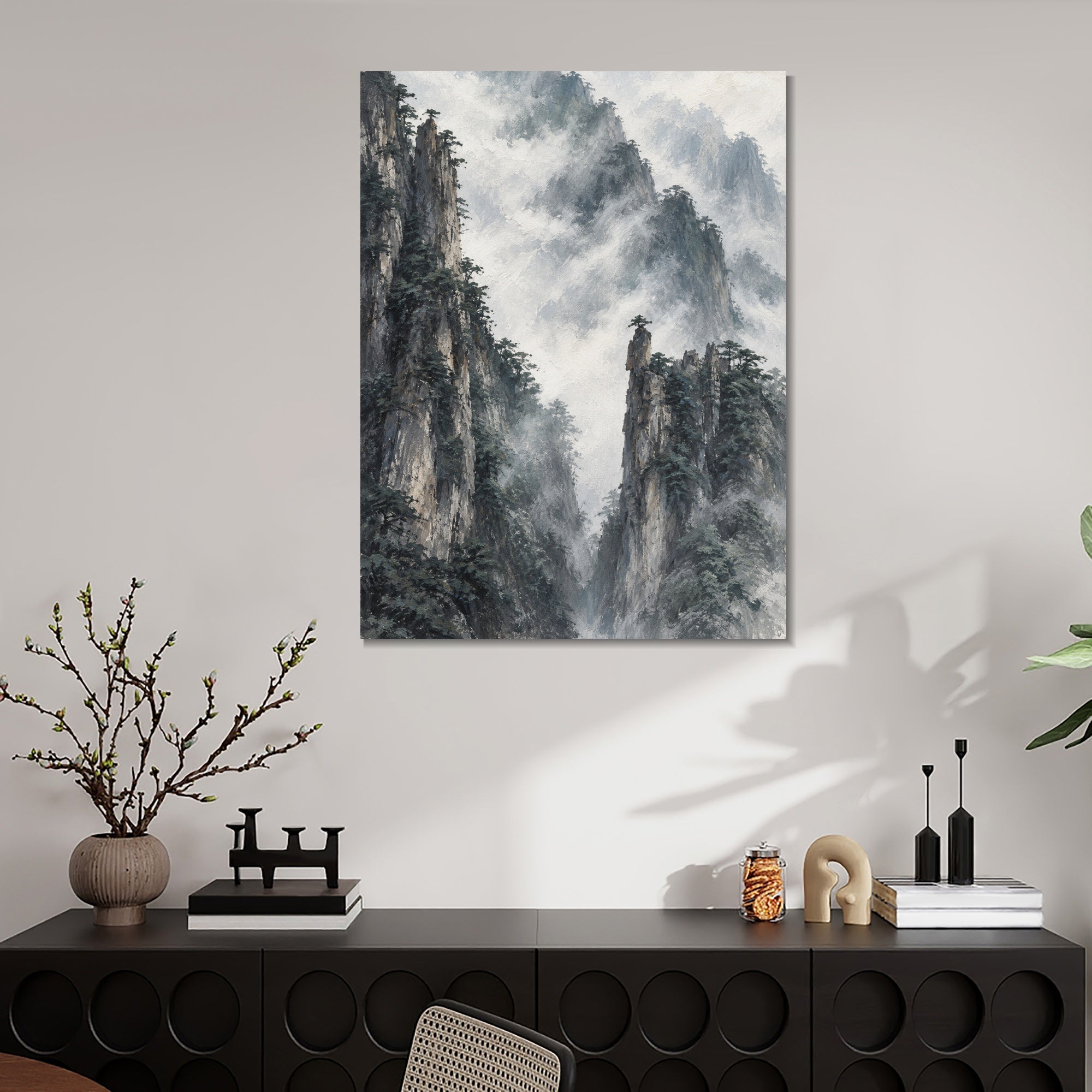
Featured artwork: Clouds Around Stone Peaks.
You have found the sofa, chosen the rug, and adjusted the lighting. Yet the room still feels unfinished. Above the furniture, an empty wall is waiting for something that makes the space feel like yours.
Landscape wall art offers a place to begin. A coastline can recall a favorite trip. A forest scene can echo the greenery outside your window. A mountain painting can introduce a sense of distance to a room filled with everyday objects.
But choosing a landscape involves more than deciding whether you prefer mountains or the sea. Color, composition, scale, and placement all influence how a painting feels in your home.
A useful approach is to start with the atmosphere you want, then consider how the artwork will relate to the room around it.
Start with the Atmosphere You Want to Create
Before browsing individual paintings, look at your space and ask: How do I want this room to feel?
Your answer gives you a starting point for comparing works that might otherwise seem equally appealing.
For a quiet, understated space
Look for landscapes with gentle color transitions, restrained contrast, and areas of open sky or water. A distant shoreline or mountain softened by mist may work well when you want the artwork to sit comfortably within the room.
Pay attention to the amount of detail, too. A painting with a few clearly defined forms creates a different visual rhythm from one filled with branches, rocks, and changing light.
In a bedroom or reading corner, you might prefer a scene that reveals itself gradually rather than immediately drawing all your attention.

Explore Forest Slopes in Mist as a starting point for a mountain-inspired space.
For a warm, welcoming room
Consider landscapes that bring warmer colors into the composition: golden light, earthy browns, muted ochres, or sunset tones.
These colors can connect with materials already present in your home, such as oak furniture, woven textiles, or warm-toned upholstery. The connection does not need to be exact. A small echo between the painting and the room can be enough.
For a strong focal point
If you want the artwork to lead the room, look for pronounced contrasts, distinctive shapes, or a concentrated area of color.
A dramatic sky, a sharply defined ridge, or a vivid reflection can give the eye somewhere to settle. This approach can be especially useful when the surrounding furniture and finishes are simple.
The subject alone does not determine the mood. A sea painting can feel still or energetic; a forest can appear light and open or dense and dramatic. Let the actual image guide your choice.
Connect the Painting to Your Room’s Colors
Landscape paintings often contain several colors, which gives you more than one way to connect them with your interior.
Start by identifying the larger surfaces in the room: walls, flooring, curtains, and main furniture. Then notice the smaller accents, such as cushions, ceramics, and lamps.
Create a gentle color connection
Choose a painting that shares one or two tones with the room.
A blue-gray detail might relate to a rug. A warm earth tone might pick up the color of a wooden cabinet. A muted green might connect with upholstery or nearby plants.
You do not need every color to repeat. A single connection often provides enough continuity while allowing the artwork to retain its own character.

Considering a sunset theme? Explore Golden Sunset Reflections and compare its palette with the materials and accents in your room.
Introduce a deliberate contrast
You can also use art to add a color the room is missing.
In a space dominated by pale neutrals, a richer landscape can provide a clear point of interest. If the room already contains several strong colors, a more restrained painting may be easier to integrate.
When comparing options, consider the painting’s overall balance of light and dark as well as its individual colors. A work with a large dark foreground will have a different presence from one dominated by a pale sky, even if both contain blue and green.
Look Beyond the Subject to the Composition
You may love the idea of a mountain painting, but two mountain scenes can behave very differently on the same wall.
Composition—the arrangement of forms within the image—helps explain why.
Notice the horizon
A landscape with a broad, uninterrupted horizon can emphasize horizontal movement. Consider how that line relates to a sofa, sideboard, or dining table beneath it.
A composition with tall trees or steep peaks may introduce more vertical movement. Look at whether those forms complement the wall’s proportions and the surrounding furniture.
These are useful visual relationships to explore, rather than fixed rules about which shape belongs in which room.

Explore Low Shore in Mist. When comparing coastal paintings, notice how the shoreline and open space guide your eye.
Follow the focal point
Ask where your eye goes first.
Is it drawn toward the sun, an animal, a mountain ridge, or a bright patch of water? A clear focal point can help the painting hold its own on an otherwise simple wall.
If there are already several competing features nearby—a patterned curtain, open shelving, or a television—consider whether the artwork adds another point of emphasis or creates a quieter counterbalance.
Consider open space and detail
Open areas of sky, water, or mist give a composition room to breathe. Detailed foliage and textured terrain offer more to examine at close range.
Think about your viewing distance. Artwork above a sofa will often be seen from across the room, while a piece beside a reading chair may be enjoyed up close. Choose a composition that interests you from the position where you will actually see it.
Choose the Size in Relation to Your Furniture
Before deciding on a painting, measure both the wall and the furniture around it.
A common difficulty is judging artwork as an isolated object. What looks substantial on a product page may feel quite small above a long sofa. Conversely, a large piece may leave too little space around nearby doors, shelves, or lighting.
Use the full framed dimensions when planning your arrangement. Product photographs can help you imagine a setting, but measurements are the better guide to how a piece will fit your own wall.
Try a painter’s tape outline
Mark the proposed artwork’s outline on the wall with painter’s tape suitable for your wall finish. Then view it from several everyday positions:
- From your usual seat.
- From the room’s entrance.
- From the adjoining space, if the room is open-plan.
Notice whether the outline feels balanced with the furniture, whether it crowds nearby objects, and whether it has enough space around it.
If you are comparing two sizes, mark each one in turn. This is often more helpful than trying to imagine measurements from a screen.
Plan the whole arrangement
If you intend to add sconces, another painting, or objects on a console underneath, include them in your planning.
The painting does not need to fill the entire wall. It needs to work within the arrangement you are creating.
Adapt Your Choice to the Room
Your home can have a consistent style without every room using the same kind of landscape.
Living room: consider the main sightlines
Living room wall art is often visible from several directions. Choose a work you enjoy both from across the room and from your usual seating position.
If the painting will hang above the sofa, consider its relationship with the sofa’s width, the cushions, and any nearby lamps. In a room with strong patterns, compare a detailed landscape with a simpler one to see which creates the balance you prefer.
Bedroom: consider the view from the bed
Look at the wall from the place where you begin and end your day.
If you want a gentle backdrop, explore softer contrasts and less densely packed compositions. If you enjoy bold color, consider how much emphasis you want the artwork to have within the room.
Let your own response to the image lead the decision.
Entryway: choose a scene that reads clearly
In an entryway, people may only see the artwork briefly while moving through the space. A recognizable silhouette or clear focal point can make an immediate impression.
Check the available viewing distance and the clearance around doors, coat hooks, and furniture before choosing the size.

Prefer nature scenes with an animal subject? Discover Stag in the Forest Light.
Explore Different Directions in the INVINART Collection
The INVINART Landscapes & Nature collection brings together subjects ranging from mountains and coastlines to woodland scenes and nature-inspired fantasy.
Use the featured works in this guide as starting points:
- Forest Slopes in Mist for an interest in mountains and mist.
- Golden Sunset Reflections for sunset scenery and reflected light.
- Low Shore in Mist for coastal subjects.
- Stag in the Forest Light for a woodland scene with an animal subject.
Compare them using the same questions: Which colors connect with your room? Where does your eye settle? How much detail do you want?
Then check the available dimensions and product specifications before choosing. You may find that the composition you respond to most is different from the subject you originally planned to buy.
Choose a View You Will Enjoy Living With
Practical considerations help narrow the options, but personal connection deserves a place in the decision.
Perhaps a shoreline reminds you of a place you return to each summer. A mountain scene might recall a memorable journey. Or you may simply enjoy the shapes and colors without associating them with a particular location.
Imagine seeing the painting on an ordinary day: while having coffee, passing through the hallway, or settling into your favorite chair.
Choose a piece that interests you beyond the moment of purchase—one you want to keep looking at as the room becomes part of your daily life.
Explore the INVINART Landscapes & Nature collection →
Frequently Asked Questions
Does landscape wall art need to match my furniture?
It does not need to match exactly. Repeating one color or a similar warm or cool tone can help connect the artwork with your room. You can also choose a contrasting piece if you want it to become a focal point.
How do I choose landscape wall art for a living room?
Start with the atmosphere you want, then compare color, composition, and scale. Consider the room’s existing patterns and the distance from which you will usually view the painting. Measure the wall and nearby furniture before selecting a size.
Can landscape paintings work in a modern interior?
Yes. Compare the painting’s shapes, level of detail, palette, and frame with the rest of the room. A landscape with simplified forms or open space is one direction to explore, while a more detailed scene can provide an intentional contrast to streamlined furniture.
How can I tell whether a painting is the right size?
Check the full framed dimensions and mark them on your wall with suitable painter’s tape. View the outline from your usual seat and the doorway to judge how it relates to the furniture and surrounding space.